
Hedge Cutting and Reduction
Blooming Marvellous Gardens cuts, reshapes and reduces hedges around Banbury and across Oxfordshire, Warwickshire and Gloucestershire. Work ranges from an annual trim on a beech or privet boundary to a hard reduction on a leylandii run that has outgrown its space. Hedge work sits alongside the rest of our rest of the work we take on, so a hedge can be cut on its own or folded into a regular maintenance round.
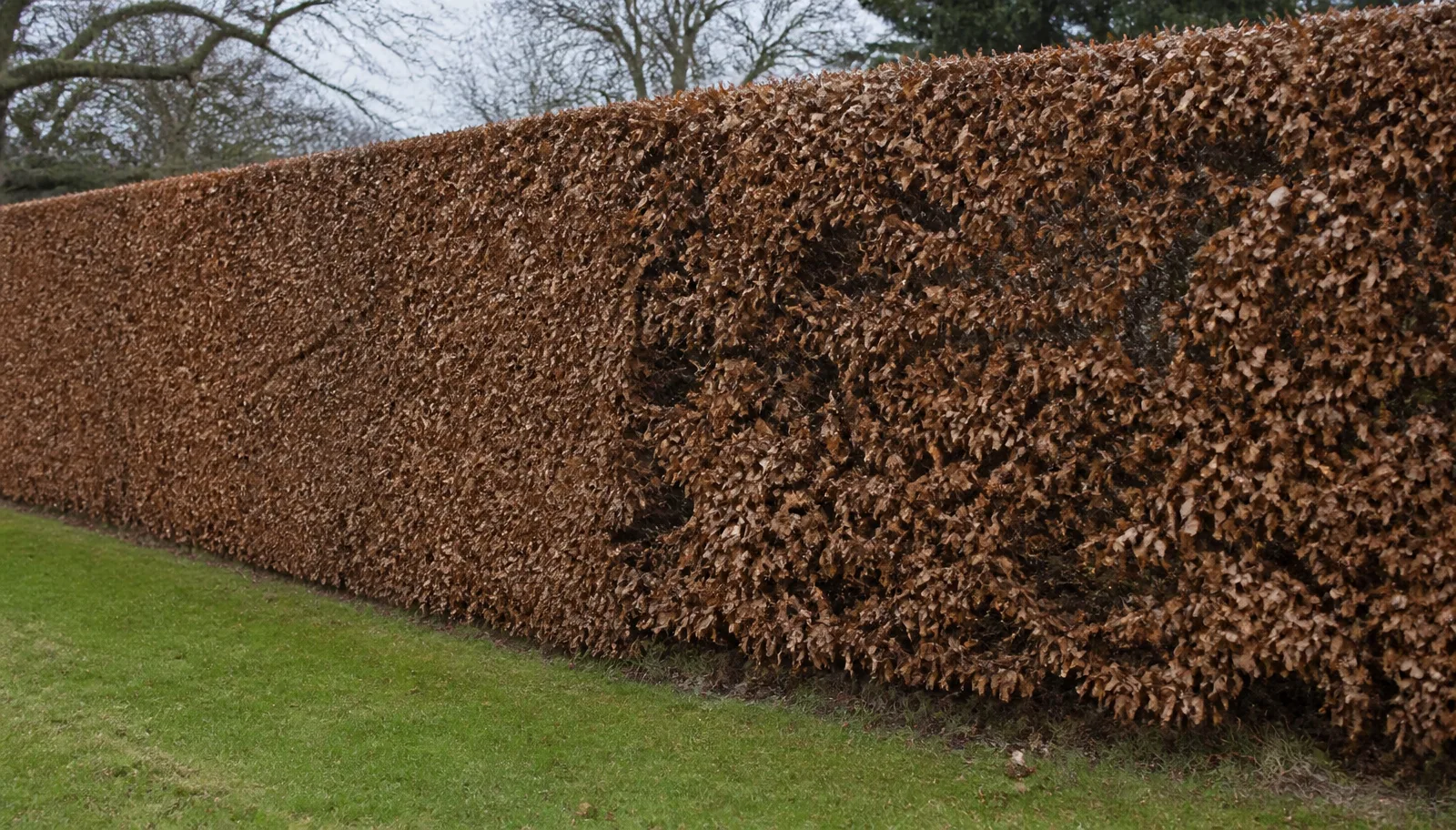
Every hedge is looked at before a blade goes near it. Species, previous cutting history, the amount of live growth on the sides and the position of overhead cables or neighbouring boundaries all shape what can sensibly be taken off in one visit. Conifers rarely break from old brown wood, so a leylandii reduction is planned on height rather than depth. Deciduous hedges such as hornbeam, beech and hawthorn take a much harder cut and regenerate well from it.
Hedge cutting is booked either as a set service or as an hourly visit, whichever fits the job better. A single garden hedge is usually quoted as a service. A long mixed boundary, or a day spent working through several hedges of different heights, is often more straightforward as an hourly visit. Enquiries and scheduling are handled by email or phone, so ring 07926 771110 or write to bloomingmarvellousgardens@outlook.com with the hedge length, rough height and your location.
Timing
When is the best time of year to cut a hedge?
Hedge cutting is best carried out outside the bird nesting season, which runs broadly from March to August, so autumn and winter are the usual windows for reductions and reshaping. Light formative trims on fast-growing evergreens can be taken in late summer once nesting has finished. Blooming Marvellous Gardens checks every hedge for active nests before any cut and reschedules the work where one is found.
The nesting season is a legal and practical constraint, not a preference. Between March and August, hedges are the most heavily used nesting habitat in a garden, and a hedge that looks empty from the path often is not. Where a hedge genuinely must be touched during those months, the work is limited to a light trim after a careful inspection, and anything more substantial waits until September at the earliest.
Beyond nesting, timing also depends on the plant. Formal evergreens such as yew, box and privet hold a crisp line best when trimmed in late summer, because the cut face has time to firm up without pushing soft new growth into the first frosts. Flowering hedges are cut after they have flowered so the following year's display is not removed along with the shoots. Hard reductions on deciduous hedges are done in the dormant months, when the structure is visible and the plant is carrying no leaf.
Arisings
What happens to the cuttings?
Cuttings are cleared from the site as part of the job unless you would rather keep them. Where a garden has room, arisings can be stacked as a habitat pile or shredded and returned to beds as a mulch. Removal and disposal are priced with the work, and because jobs are booked either as a service or as an hourly visit, you can decide which arrangement suits you.
On a routine trim the volume is small and sheeting up as we go keeps the lawn and borders clean. A reduction is a different matter: a long conifer run taken down by a metre produces a considerable amount of material, and clearing it is often the longer half of the day. That is worth knowing when you compare quotes, because a price that looks low may leave the arisings stacked on your drive.
Cuttings left on site have their uses. A discreet pile at the back of a border rots down over a couple of years and shelters hedgehogs, beetles and overwintering insects. Shredded evergreen makes a serviceable mulch for paths and shrub beds. Where nothing is to stay, everything is loaded and taken away, and the base of the hedge is raked out so the finished line is visible.
The work
Reductions, reshaping and annual trims
An annual trim keeps an established hedge at the size it already is. The cut follows the existing face, takes off the season's extension growth and tidies the top. Done every year, it holds a boundary at a workable height indefinitely and takes far less time than catching up after three or four years of neglect.
A reduction changes the size of the hedge. Height comes down, width comes in, and the hedge is put back within the space it is meant to occupy. This is the work most often asked for on properties where a boundary has crept over a path, shaded a window or started to lean. Reductions are staged where the species needs it, taking one side one year and the other the next, so the hedge is never stripped of all its live growth at once.
Reshaping addresses a hedge that has lost its form. Tops that have gone rounded and heavy are brought back to a level line, and sides that have been cut vertically for years are given a slight batter, wider at the base than the top, so light reaches the bottom growth and the hedge stays furnished to ground level. On larger properties this work is usually programmed alongside scheduled care for larger sites, so boundaries and open areas are dealt with in the same rounds.
Where a boundary has gone thin and leggy at the base, cutting can no longer put it right, and laying the hedge over the winter is the traditional answer to regenerating it from ground level.
Access, waste and neighbouring land all affect how a hedge job runs. Tall boundaries need platforms rather than ladders. A hedge on a shared boundary can be cut back to the line on your side, and we will say plainly where that limit falls. Roadside hedges are cut with the verge and sightlines in mind.
Get in touch
Book hedge cutting
Tell us the approximate length and height of the hedge, the species if you know it, and where the property is. From that we can give you a clear idea of the time involved and whether the job is better booked as a service or as an hourly visit. Call 07926 771110 or send the details through the form and we will come back with a date.