

Weed Prevention and Control
Blooming Marvellous Gardens prevents and controls weeds around Banbury and across Oxfordshire, Warwickshire and Gloucestershire. We treat weeds in beds, paths, driveways, patios and gravel areas, and we put preventive measures in place to slow new growth. This work is booked either as a set service or as an hourly visit, with a minimum booking of 2 hours, so you can choose the arrangement that suits the size of the area and how often it needs attention.
Weed control works best when it is planned across the year rather than treated as a one-off rescue. A spring prevention visit, followed by targeted treatment in summer and a tidy-up in autumn, keeps hard surfaces and planting beds in much better shape than a single blitz. Customers on our regular garden and grounds rounds often combine weed visits with regular maintenance so the garden is kept clean as part of the routine.
Enquiries and scheduling are handled by email or phone. You can reach us on 07926 771110 or at bloomingmarvellousgardens@outlook.com to describe the area, the surfaces involved and the level of weed cover.
Approach
What is the difference between prevention and treatment?
Prevention stops weeds from germinating in the first place, usually by applying a residual treatment to bare soil or gravel in spring and keeping beds mulched. Treatment deals with weeds that are already growing, using targeted methods to clear them without harming nearby plants. Blooming Marvellous Gardens uses both approaches across Oxfordshire, Warwickshire and Gloucestershire.
Prevention is the quieter half of the job. On gravel drives and paths it means treating the surface before the growing season starts, so seeds that land are less likely to take root. In beds it means a good layer of mulch over clean soil, which blocks light from reaching the weed seeds below. Neither method guarantees zero weeds, but both reduce the number dramatically and make the weeds that do appear easier to remove.
Treatment is what most people notice first. Established weeds on a patio or driveway are cleared, either by hand or with careful application of a targeted product. In borders the approach is more selective, because the last thing a gardener wants is to damage the plants that are meant to be there. Weeds are removed with the root intact where possible, and any bare soil is covered to stop the next wave from moving in.
The two work together. A site that is only treated will look clean for a few weeks, then the weeds return. A site that is only prevented may never fully clear the weeds that are already established. Our weed control visits combine both, and we record what was done so the next visit can build on it.
Timing
How long does weed control last?
A preventive treatment on driveways, paths or gravel typically lasts one season before new weed seeds settle and germinate. Bed weed control depends on how thick the mulch is and how actively the border is managed. Most customers book a spring prevention visit followed by one or two follow-ups through the year.
Weed seeds travel on the wind, on shoes, on mower wheels and on the fur of animals, so a clean surface does not stay clean forever. On hard surfaces such as block paving, tarmac and gravel, a preventive treatment in early spring gives the best results, with a follow-up in late spring or early summer to catch anything that has broken through. Sites with heavy tree cover or nearby bare soil usually need more frequent attention.
In planting beds, weed control is as much about maintenance as it is about products. A thick mulch applied over weed-free soil in spring can keep a border looking tidy for months. Once the mulch thins or plants die back in winter, light reaches the soil again and weeds return. The best long-term answer is regular garden maintenance that keeps beds hoed, mulched and planted densely enough to outcompete weeds.
Weeds are only half of what marks a hard surface. Algae, moss and lichen sit on top of the paving rather than rooting in it, and lifting those is a job for washing the surface down, usually best done once the weeds have been treated.
Weather also affects timing. A warm, wet spring brings weeds on fast and can shorten the gap between visits. A dry summer may slow growth but also stress wanted plants, so treatments are adjusted accordingly. We always look at the conditions on the day rather than following a fixed calendar.
Where it applies
Driveways, borders and gravel
Driveways and patios are the areas where weeds show most obviously. Joints between paving slabs, gaps in block paving and edges against walls all collect the fine soil that weeds need. We clear these joints, treat the surface where appropriate, and advise on whether sealing or re-sanding would help. The aim is not just to kill what is visible, but to make the surface less welcoming for the next crop.
Gravel areas are particularly persistent. Weeds establish in the layer of silt that settles beneath the stones, so raking off the top few centimetres and laying a fresh membrane can be the most effective long-term fix. Where that is not practical, a combination of hand weeding and preventive treatment keeps the gravel presentable through the season.
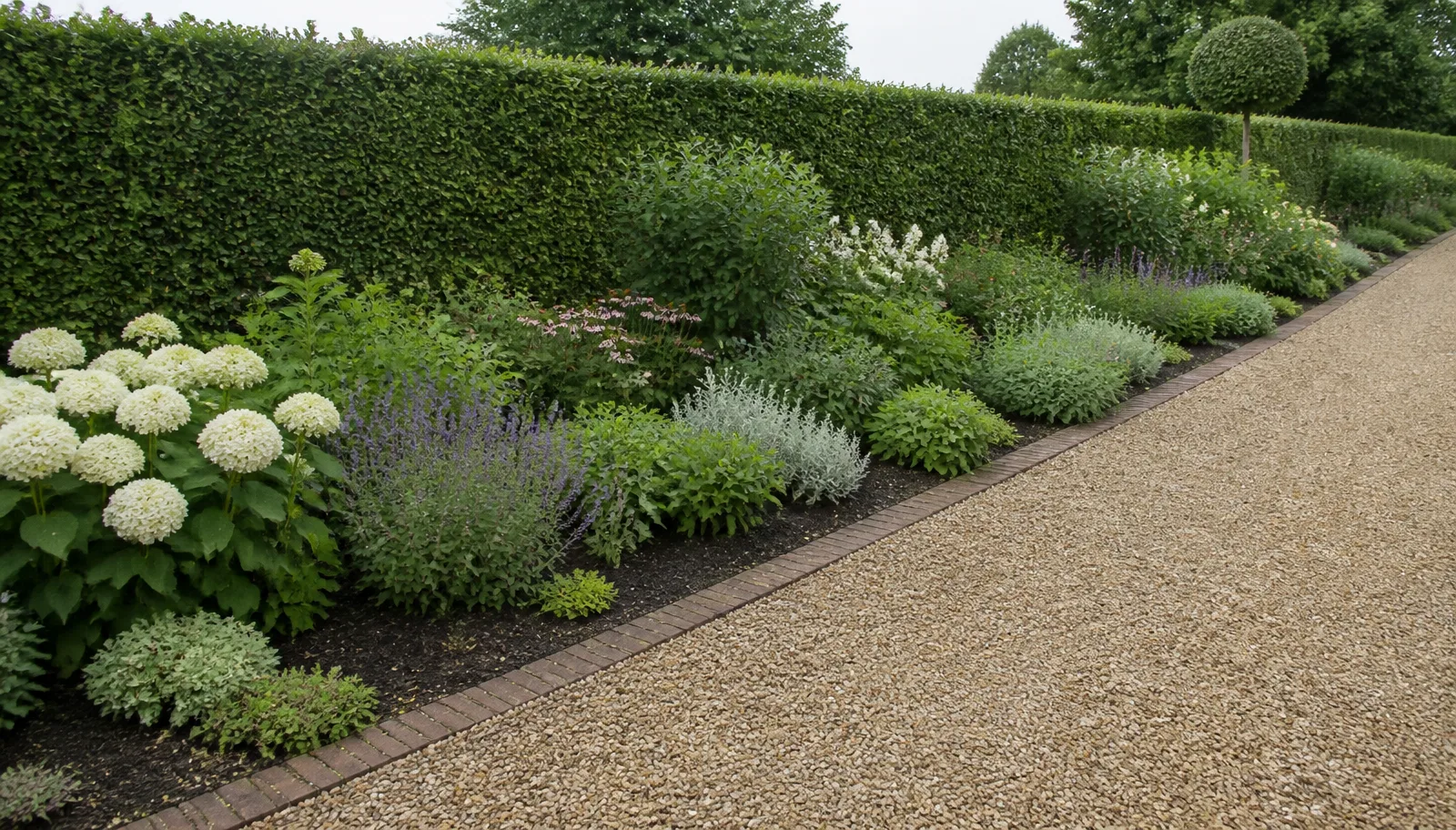
Borders need a lighter touch. Herbaceous perennials, shrubs and young trees are easily damaged by careless treatment, so we work carefully around them and remove weeds by hand where they are close to wanted plants. Mulching after weeding is the single most useful thing you can do for a border, and it is included in most of our weed control visits.
Larger sites often benefit from combining weed control with scheduled visits to the wider site, so paths, car parks and entrance areas are kept clean as part of the regular round. This is especially useful for commercial properties where first impressions matter and where safety issues such as slippery paths or blocked drains need to be caught early.
Get in touch
Book weed control
If weeds are getting ahead of you on driveways, paths, gravel or in planting beds, send us a description of the area and a rough location. We will recommend whether a single treatment, a seasonal programme or ongoing maintenance is the right approach. Call 07926 771110 or send the details through the form and we will come back to you by email or phone.
You can also email bloomingmarvellousgardens@outlook.com. We aim to respond within 48 hours and can usually arrange a first visit within a week, depending on the season and your location.